
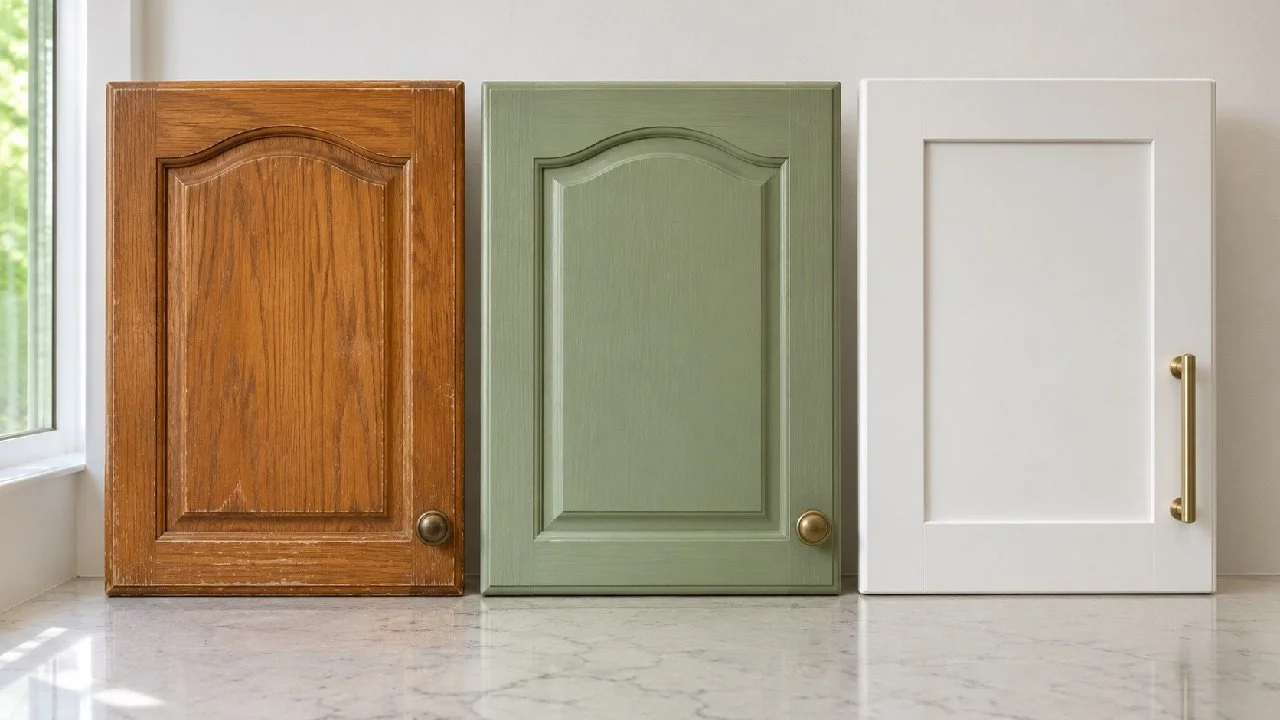
Reface your kitchen cabinets when the boxes are solid and you like the layout. Refinish them when only the finish is worn, and replace them when the layout or boxes no longer work.
This choice matters. Pick wrong and you either pay for new boxes you didn't need, or spend on a finish that won't fix the real problem.
If you're weighing cabinet refacing vs. replacing for a North Vancouver kitchen renovation, this guide explains each option, how to compare them, and what to check in older homes.
What Is Cabinet Refacing?
Refacing keeps your existing cabinet boxes and replaces the parts you see:
New doors and drawer fronts: Pick a new style, colour and finish.
New hardware: Fresh hinges, pulls and knobs.
Same boxes: We check they're sound first.
Our cabinet refacing service costs less than a full remodel and uses fewer new materials.
What Is Cabinet Refinishing?
Refinishing renews the surfaces you already have:
Prep: We clean and prepare every surface.
New finish: Choose a new colour, stain or protective coat.
Repairs: Worn, faded or peeling surfaces are restored.
It's the simplest way to update the colour of cabinets you want to keep.
When to Replace Your Kitchen Cabinets
Replace when the problem goes deeper than the surface:
Damaged boxes: Water damage, sagging shelves or broken frames.
A layout that doesn't work: You want to move the sink or add an island.
Better storage: You want pull-out shelves and soft-close drawers built into new custom cabinets.
Moving plumbing or wiring also means getting kitchen renovation permits first.
Cabinet Refacing vs. Replacing vs. Refinishing
Use this quick guide to match the option to your kitchen:
Refinish if: The boxes, doors and layout are fine, and you only want a new colour.
Reface if: The boxes are solid and the layout works, but you want a new door style.
Replace if: The boxes are damaged, or you want a new layout or more storage.
What to Check in Older North Vancouver Homes
Older kitchens need a few extra checks before renovations start:
Lead paint: Health Canada says homes built before 1960 probably contain lead-based paint. Don't sand or heat-strip it.
New panels: MDF, particleboard and hardwood plywood used in cabinetry must meet federal formaldehyde emission limits to be sold in Canada.
Get an Honest Recommendation From Our Team
We reface, refinish and replace cabinets, so we recommend what your kitchen actually needs.
Our owner, Joey Heilman, has 31 years as a renovation contractor, and every North Vancouver project starts with an in-home consultation and a written estimate.
Ready to update your kitchen? Call 778-893-7818 or request a free quote.
FAQs about Refacing, Refinishing or Replacing Kitchen Cabinets
Here are quick answers to common questions:
Is refacing cheaper than replacing kitchen cabinets?
Usually, yes. You keep your existing boxes and pay for new doors, drawer fronts and hardware instead of full cabinets.
Can you reface damaged cabinet boxes?
No. Refacing needs sound boxes. Water-damaged or sagging boxes should be replaced.
Can I change my kitchen layout by refacing?
No. Refacing and refinishing keep your current layout. Moving cabinets, sinks or appliances means new cabinets.
Is it safe to refinish old painted cabinets?
With care. Paint in homes built before 1960 may contain lead, so avoid sanding and heat guns.
Which option is the most eco-friendly?
Refinishing and refacing, because both reuse your existing cabinets instead of sending them to the landfill.