
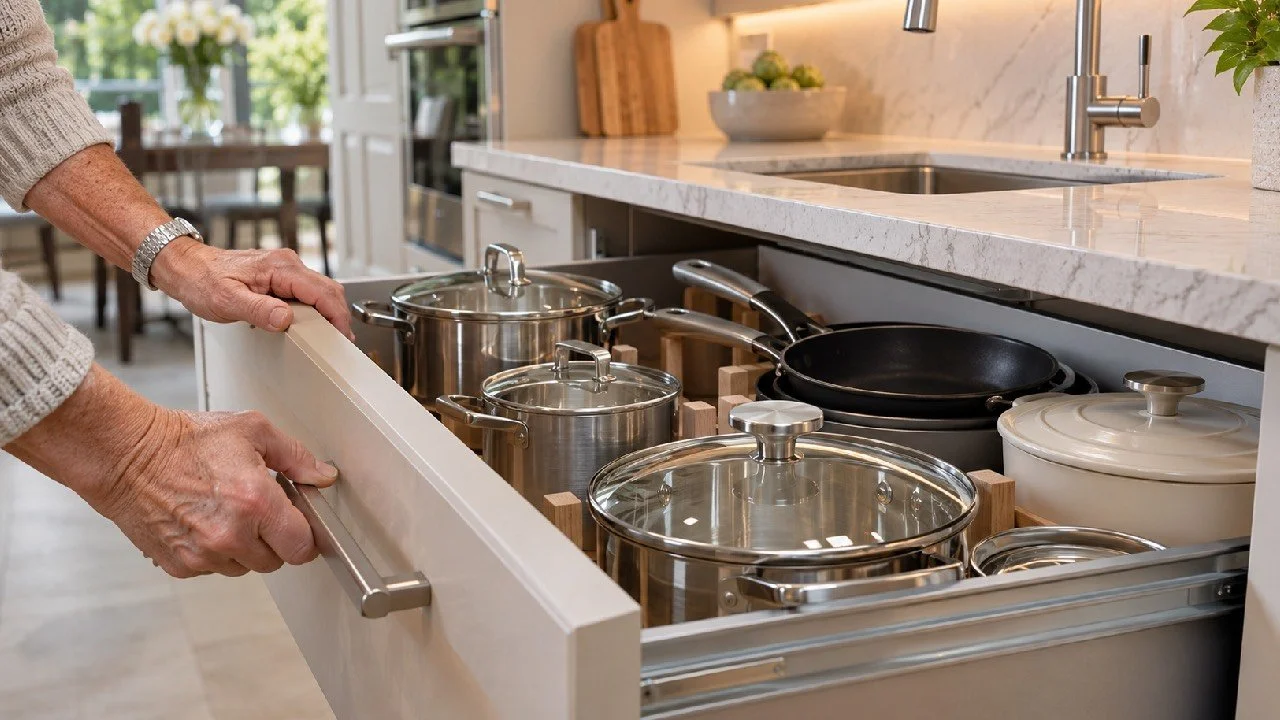
An aging-in-place kitchen is one you can keep using safely as your strength, balance and eyesight change. What matters most is reachable storage, easy-grip controls, good light and non-slip floors.
Planning these features into a kitchen renovation now is simpler than retrofitting after a fall or a health change. Most older adults want to stay in their own homes, and the kitchen is where independence is tested daily.
This guide is for North Vancouver homeowners aged 45 and over, and for families planning for a parent. It covers what a Certified Aging-in-Place Specialist (CAPS) checks, the design changes that help most, and the tax credit that can offset the cost.
What Is a CAPS-Certified Contractor?
CAPS is a designation created by the National Association of Home Builders in the U.S. with AARP. It trains renovators to adapt homes for older adults. Our owner, Joey Heilman, holds the CAPS designation.
What a CAPS Contractor Checks in Your Kitchen
We start with how you use the room today and how that might change, looking at:
Reach: What you can reach without a step stool or deep bending.
Grip: Whether knobs, taps and appliance controls are easy to turn.
Light: Whether work areas are lit without shadows.
Floors: Slip risk, changes in level and clear space to move around.
Seating: A place to sit while you prep.
Aging-in-Place Kitchen Design Features That Help Most
These upgrades make the biggest daily difference:
Drawers and pull-outs: Full-extension drawers and pull-out shelves bring items to you.
Reachable upper storage: Pull-down shelves or lower wall cabinets keep everyday items between waist and shoulder height.
Easy controls: Lever or touch faucets, D-shaped pulls and appliances with front-mounted controls.
Raised appliances: A wall oven or drawer microwave at counter height cuts lifting of hot dishes.
Varied counter heights: A lower section with knee space lets you work while seated.
Layered lighting: Under-cabinet task lights plus bright, even overhead light.
Slip-resistant flooring: A matte, level surface without trip edges.
Many come built into new cabinets; see when replacing your kitchen cabinets makes sense.
Plan Ahead With Canada's Aging-in-Place Checklist
The Government of Canada's aging-in-place checklist walks you through your home, health and finances, and it's a useful step before meeting a contractor.
Tax Help for Accessible Kitchen Renovations
The federal Home Accessibility Tax Credit lets you claim up to $20,000 a year in eligible renovation costs. The renovation must help someone who is 65 or older, or eligible for the disability tax credit, live more safely or independently. Keep every receipt.
Design Your Kitchen With a CAPS-Certified Contractor
Joey Heilman has 31 years as a renovation contractor and plans every North Vancouver kitchen design around the people who'll use it. Every project starts with an in-home consultation and a written estimate.
Planning for the years ahead? Call 778-893-7818 or request a free quote.
FAQs about Aging-in-Place Kitchen Design
Here are quick answers to common questions:
What does CAPS stand for?
Certified Aging-in-Place Specialist.
When should I start planning an aging-in-place kitchen?
During your next kitchen renovation, while walls and cabinets are already open.
Will an accessible kitchen look institutional?
No. Drawers, lever faucets and good lighting look like any modern kitchen.
Can I claim kitchen accessibility upgrades on my taxes?
Possibly. The federal Home Accessibility Tax Credit covers eligible renovations for people 65 and older or eligible for the disability tax credit.
Do aging-in-place kitchen changes need a permit?
Only if the work changes wiring, plumbing, gas lines or walls. Drawers, faucets and pull-outs usually don't.