
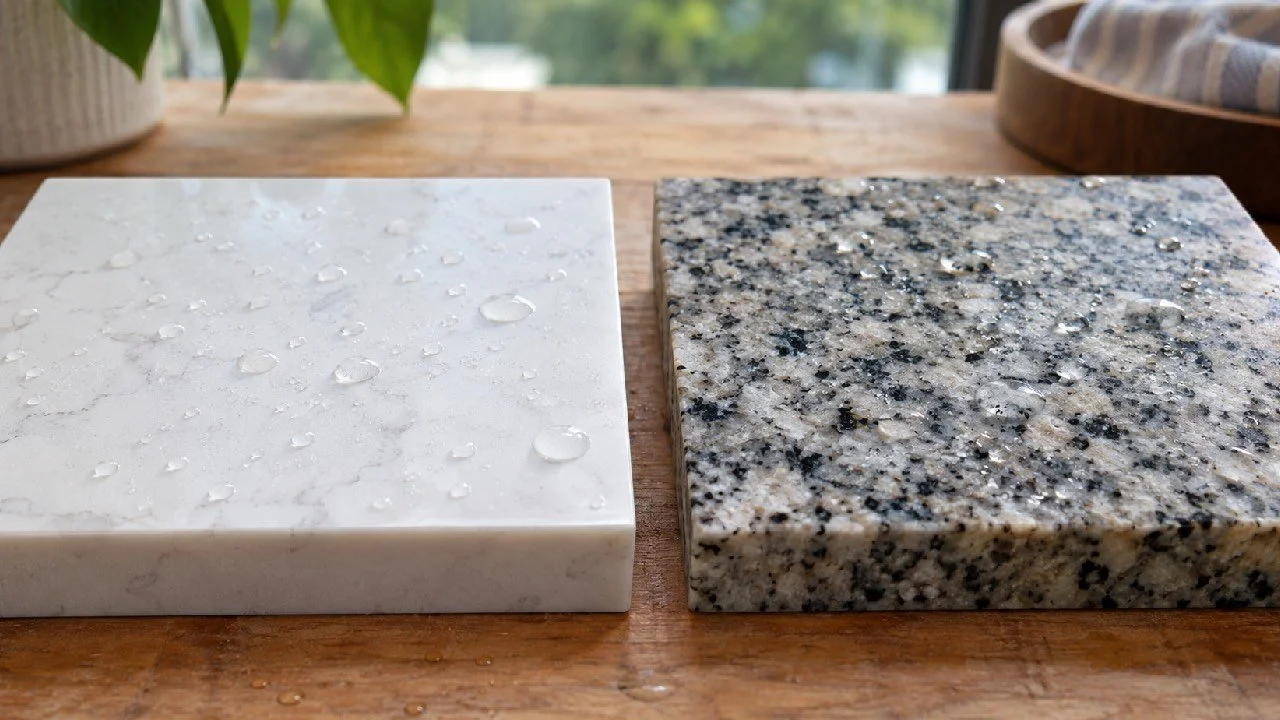
Quartz suits busy kitchens that need a low-maintenance surface, while granite suits cooks who want natural stone that copes better with heat and sunlight. Both are durable, so the right pick depends on how you cook and how much upkeep you'll accept.
Countertops are a big, hard-to-reverse decision in any kitchen renovation, so knowing the trade-offs now saves you years of frustration.
This guide is for North Vancouver homeowners comparing quartz vs. granite countertops. It covers how each is made, daily care, heat and sunlight, safety questions and how to choose.
How Quartz and Granite Are Made
The two materials start in very different places:
Quartz: An engineered stone made from crushed quartz bound with resin and pigments. Colour and pattern stay consistent from slab to slab.
Granite: A natural stone cut from quarried blocks, so every slab is unique.
Daily Care and Upkeep
This is where the two differ most:
Quartz is non-porous, so it doesn't need sealing. Soap and water handle daily cleaning.
Granite has natural pores that vary by stone, so it needs sealing from time to time. If water drops darken the surface instead of beading, reseal.
Heat and Sunlight
Heat and light are quartz's weak points. Its resin can scorch or discolour under a hot pan, so manufacturers recommend always using a trivet. Prolonged direct sunlight can also change the colour of standard quartz.
Granite handles heat better and won't change appearance in sunlight as quickly. That matters in sunny North Vancouver kitchens.
Are Quartz and Granite Safe?
Here's what official sources say:
Granite and radon: Health Canada says building materials such as granite aren't a significant source of radon in Canada. A 2010 study of 33 granites sold here found none with significant radon. If radon worries you, test your home for radon, since soil is the main source.
Quartz and silica: Engineered stone contains more than 90% crystalline silica, compared with about 45% in granite, according to WorkSafeBC. The health risk is to workers who cut, grind and install it, so never cut or grind a quartz top yourself.
Which Countertop Should You Choose?
Use this quick guide to narrow it down:
Choose quartz if: You want easy care, a uniform look and no sealing.
Choose granite if: You cook with lots of heat, have a sunny kitchen or want a one-of-a-kind slab.
Keeping your cabinets? If you're refacing your kitchen cabinets, check that the boxes are solid and level first.
Get Honest Advice From a Local Contractor
We install both quartz and granite, so we recommend what suits your kitchen. Our owner, Joey Heilman, has 31 years as a renovation contractor, and every countertop installation starts with an in-home consultation and a written estimate.
Choosing a new countertop? Call 778-893-7818 or request a free quote.
FAQs about Quartz vs. Granite Countertops
Here are quick answers to common questions:
Does granite need to be sealed?
Yes, from time to time. Do a water-drop test; if the stone darkens, reseal it.
Can you put hot pans on quartz?
Use a trivet. Heat can scorch or discolour the resin.
Is quartz or granite better for a sunny kitchen?
Granite. Prolonged direct sunlight can change the colour of standard quartz.
Do granite countertops give off radon?
Not at significant levels, according to Health Canada.
Is a quartz countertop safe to have at home?
Yes. The silica hazard WorkSafeBC describes affects workers who cut, grind and install engineered stone.
Can quartz be used outdoors?
Standard quartz isn't recommended in direct sun. Some brands make UV-rated outdoor lines.